







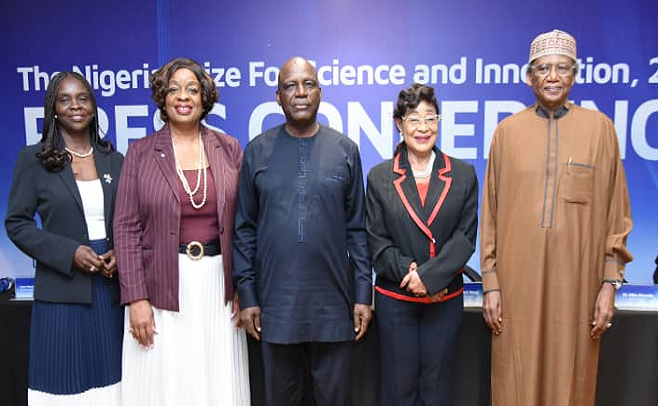

Ajibola Akindele, Country President, Schneider Electric Anglophone Africa, has identified artificial intelligence as a critical tool for maintaining data centres operations in the face of frequent power grid instability.
Akindele, while emphasising that the future of Nigerian data centre will be defined by how it contributes to the broader energy ecosystem, submitted that AI has capacity to optimise energy systems from microgrids to industrial processes, enabling smarter and faster decision-making.
He said: “Predictive algorithms now enable operators to forecast energy spikes, adjust dynamically, and smooth out load variability to protect grid stability. In the Nigerian context, smart scheduling allows energy-intensive training tasks to run when renewable supply is abundant or during off-peak hours, reducing operational costs.
“Flexible power management also lets workloads scale up or down according to computational needs. When guided by Artificial Intelligence, data centers can evolve from energy-hungry to energy-aware ecosystems.”
In a statement, the country director noted that the AI sector is placing unprecedented pressure on the country’s already strained power infrastructure, stressing the need for data centers to balance energy demand with sustainability.
He warned that the next wave of innovation driven by AI will significantly increase electricity consumption, with high-performance computing systems requiring far more power than traditional IT workloads.
He said: “In Nigeria, where the digital economy is a primary pillar of national development, Artificial Intelligence workloads are projected to consume a significant portion of all installed data centre capacity.”
According to him, Artificial Intelligence training racks can draw between 100 and 140 kilowatts each, creating unpredictable, high-density loads.
He, however, stressed that increasing power supply is not a viable solution in Nigeria, where grid constraints are common but to embrace energy management to address some of the inefficiencies.
Citing projections from Bloomberg and PwC, where AI is expected to reach USD 1.3 trillion by 2032 and contribute up to USD 15.7 trillion to the global economy by 2030, respectively, Akindele, further noted that this growth comes with steep energy demands, particularly for countries like Nigeria where grid capacity remains limited.