






Nigeria is stepping up efforts to shape a more integrated West African telecommunications market, as regulators across the sub-region move to tackle long-standing barriers such as high cross-border roaming costs, uneven regulation and weak digital infrastructure.
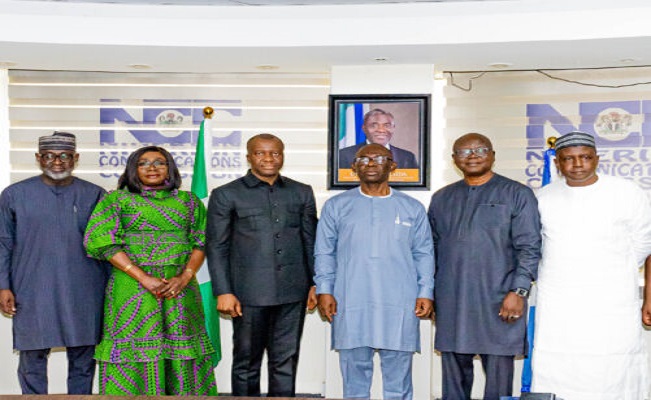
The Nigerian Communications Commission (NCC) said it is deepening collaboration with sister regulators across West Africa, reaffirming its commitment during a high-level visit by a delegation from the Liberia Telecommunications Authority (LTA) to its Abuja headquarters.
Speaking at the meeting, Aminu Maida, the executive vice chairman of the NCC, represented by Kelechi Nwankwo, the Commission’s director of corporate planning, strategy and risk management, said regional cooperation remains central to Nigeria’s telecoms strategy as countries seek to expand their digital economies and improve access to affordable communications services.
Maida said the NCC believes West Africa’s economic and social development is increasingly tied to seamless digital connectivity, noting that the region “becomes stronger and more prosperous when all countries are interconnected.”
Nigeria has long championed regulatory alignment through platforms such as the West Africa Telecommunications Regulators Assembly (WATRA), and Maida said sustained engagement with regional partners is now even more critical as emerging technologies reshape the sector and cross-border data and voice traffic continue to grow.
A key focus of Nigeria’s regional push is the recognition of Information and Communications Technology (ICT) as critical national infrastructure within the Economic Community of West African States (ECOWAS).
Maida recalled the NCC’s advocacy on the issue, noting that Nigeria has already formally designated ICT as part of its critical national information infrastructure, a move aimed at strengthening resilience, security and long-term investment in the sector.
He said the NCC stands ready to support shared regional initiatives and to help translate policy discussions into actionable outcomes that would benefit telecom consumers and operators across West Africa.
For Liberia, the engagement reflects a broader effort to align its regulatory framework with regional standards as the country reviews its licensing regime to accommodate new technologies.
Clarence Massaquoi, chairman of the Board of Commissioners of the Liberia Telecommunications Authority, said Nigeria’s role as the region’s largest economy and biggest telecoms market makes its regulatory direction particularly influential.
“Progress made by Nigeria often has far-reaching impacts across other West African countries,” Massaquoi said, adding that affordable and reliable communications services are essential to achieving ECOWAS’ vision of regional integration.
Massaquoi said cross-border roaming remains one of the most pressing challenges, particularly for citizens and businesses operating across national boundaries.
He disclosed that Liberia has already signed bilateral telecom agreements with The Gambia and Côte d’Ivoire, and is in advanced talks with Ghana and Guinea-Conakry, as it works toward smoother regional connectivity.
He also sought Nigeria’s support in regulatory capacity building and the sharing of best practices, especially as Liberia updates its licensing and regulatory structures to reflect evolving technologies and market realities.
Both regulators said the visit underscored a shared commitment to deepen cooperation, identify priority areas for engagement and accelerate initiatives that could drive seamless connectivity, regional integration and broader socio-economic development across West Africa.